









Home > Application solutions > Sound Intensity

Sound Intensity for Industrial Acoustics


Sound Intensity for Industrial Acoustics

Main Features

  • Real time sound intensity spectrum
  • Narrow band, octave, and 1/3 octave representation
  • Guided acquisition procedure
  • Sound power measurement: guided procedure following ISO9614-I&II
  • Field criteria and indicators calculation
  • Easy and flexible generation of complex and multiple surfaces
  • Classical exploded 2D & advanced 3D graphics sound mapping
  • Intensity, Pressure and Spectra selectable by segments
  • Multi-frequency views
  • Automatic sound power report
  • Calibration module for phase calibration and pressure-residual intensity index.
  • Transducer Database
  • Probe remote control management

The Sound Intensity Solution is part of the NVSolutionsŪ offered by OROS for Industrial Acoustic applications. Sound Intensity is a flexible experimental technique that allows to obtain a large number of information on the sound pattern emitted from a source such as Sound Power or Noise Source localization.

Sound Power Determination

For the best efficiency, the interface is dedicated to sound power determination whether it is based on a point by point (ISO 9614-1) or on a scanning (ISO 9614-2) procedure. The procedure can be followed step by step through a task dedicated interface making the set up quick and easy. Thus, the Sound Intensity Solution is complementary to the Sound Power Solution that is based on the measurement of the sound pressure level as recommended by ISO 374x series.

Sound Intensity Measurements

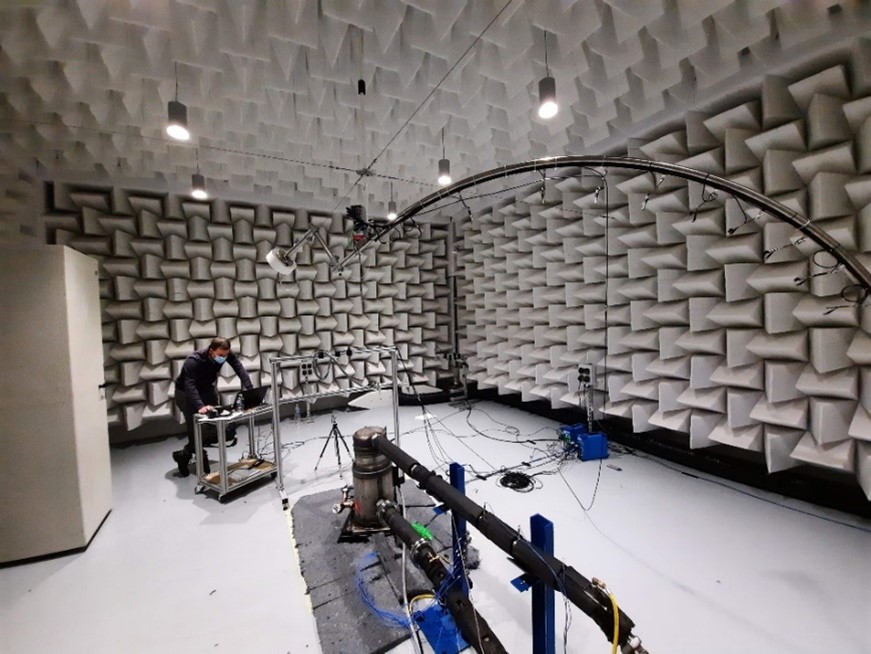
Measuring sound intensity allows the user be flexible in the measurement environment and on its acoustic constraints brought for example by background noise. In addition, Sound Power can be determined on several surfaces and several sources. Thus several suspected sources can be compared and ranked.

Performance and Innovation

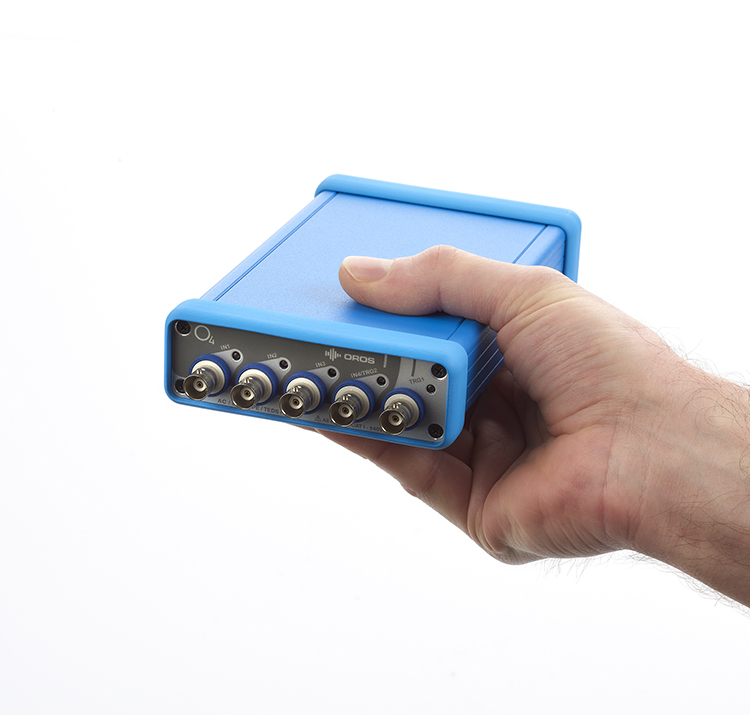
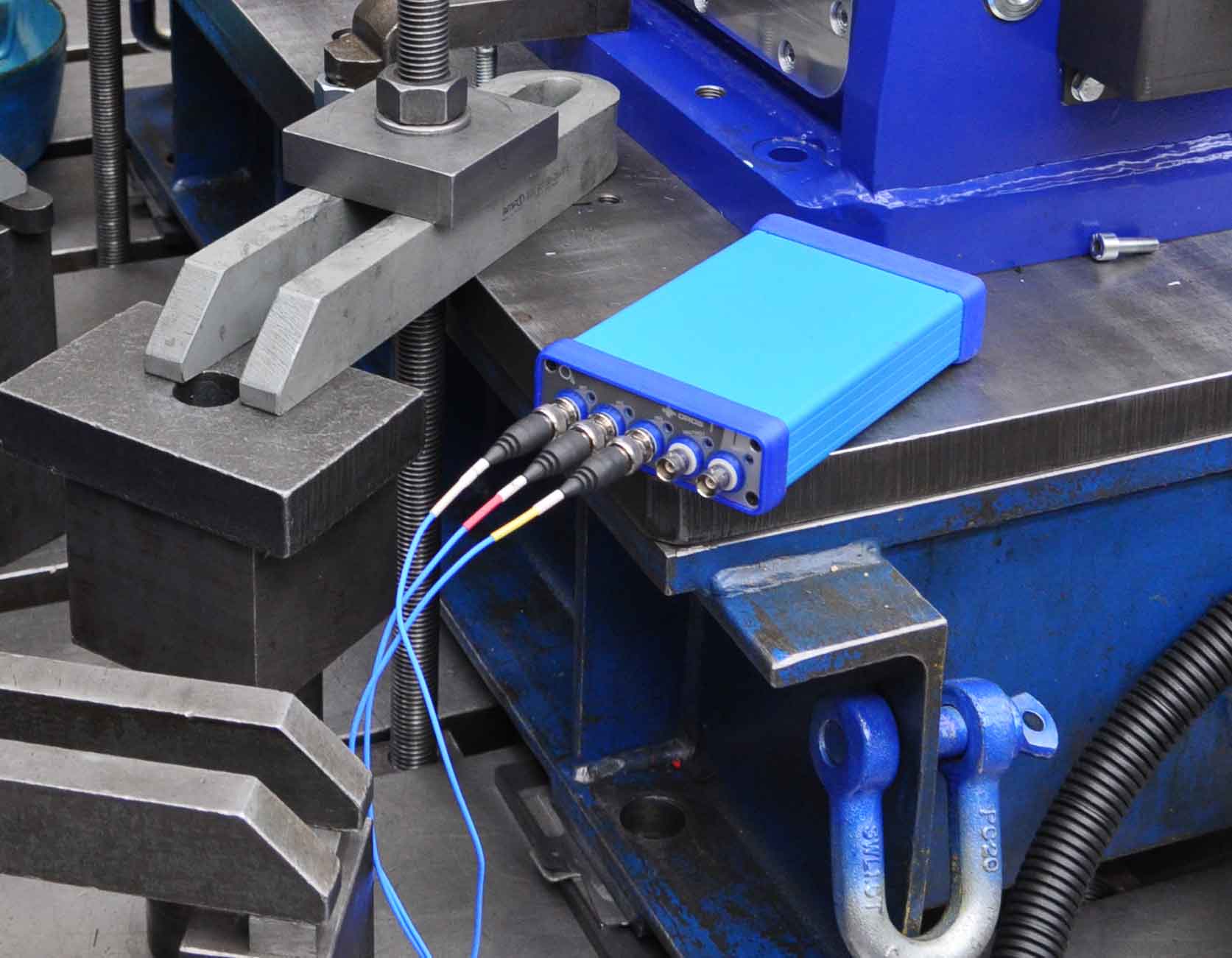
Based on OROS portable analyzers, the Sound Intensity Solution is perfectly adapted for field measurements as often organized during machinery fault diagnosis and troubleshooting.
Furthermore, the 3D or exploded 2D sound maps make of the Sound Intensity an efficient tool for locating sources as it is also of common practice in R&D laboratories when trying to reduce Sound emission from noise sources.

back to top