











Restricted area: please be first logged in myOROS
or create an account.
![]() |
![]() |
|
|
Vehicles | Components | Machine Tools | |
![]() | ![]() | ![]() | |
|
|
|
|

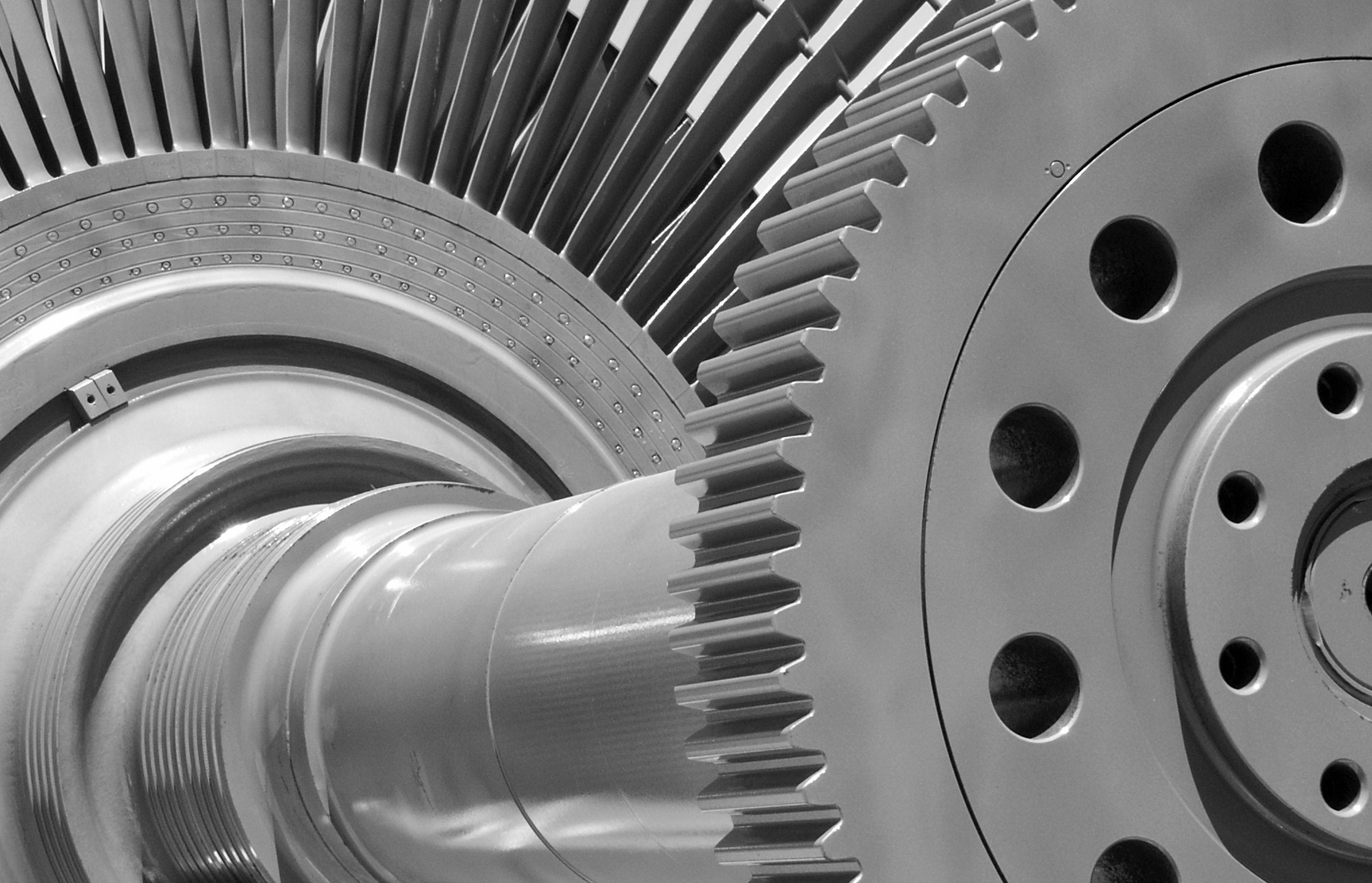
| | Gear AnalysisSignatures coming from gear box vibrations have a high frequency content. They are analyzed with tools such as cepstrum, kurtosis and harmonic markers (provided by the OROS FFT-Diagnostics tool). The Constant Band Tracking function is also especially useful for looking at order profiles during run-ups and run-downs of the transmission train. | ![]() | Torsional AnalysisThe OROS torsional module corresponds to a frequency to voltage converter that transforms a pulse train signal into a varying rotating speed value. This is a common cause for vibration in engines. A typical display is the varying angular velocity profile versus time. The rotating speed value signal can be analyzed: torsional modes can be deduced. |
![]() | Hybrid TransmissionClassical or hybrid transmissions are some of the major source of vibration in the drive train. Nowadays, CVT (Continously Variable Transmission) transmissions integrate a flexible transmission belt that allows an infinite number of transmission ratios. In order to carry order tracking, phase reference and rotating speed determination, the transmission ratio is based on a mathematical formula based on 2 tachometer's inputs. | ![]() | BalancingBalancing is a common application in particular for crankshaft that is often carried out during production. The OROS Balancing module enables to unbalance quickly and accurately. |

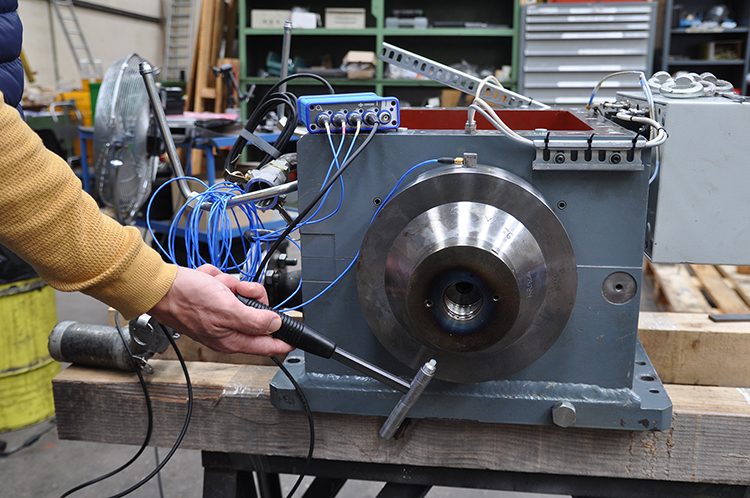
| | Coupling AnalysisAbsorbing and damping mounts are the components through which the vibration energy is transmitted between the engine and the rest of the vehicle: their properties dimensions and positions are key and should be determined with care. The techniques used are cross spectrum, transfer functions, damping, as well as ODS. | ![]() | Modal Analysis Modal Analysis is one of the key step when testing component prototypes: it will determine their structural characteristics and so, will define how they will react to operating excitations. Shaker or impact hammer excitations can be used to capture the experimental datasets: the final stage is the actual OROS Modal analysis.
|
| | Cutting Tool OptimizationTo produce high quality vehicles, high quality machining is required. Machine tools like any other high speed machines have a potential rich vibration content. It is essential to monitor and optimize vibrations generated at the cutting tool position in order to avoid any possible defect in the quality of the manufactured surface.
|

| | In-Vehicle RecordingThe different components installed in a vehicle are tested on the road to validate their integration in the vehicle (brakes, tires, turbocharger etc …). It requires a portable, rugged and easy recording system with a CAN bus interface. PC free recording is especially very is especially very useful for the toughest conditions (D-rec, Direct Recording)
|
![]() | Fatigue TestDrive train and transmission components are submitted to high static and dynamic stress that create fatigue in the long term. During the prototype development and validation process, strain gauges are used to determine these parameters. They are also determined in combination with other parameters such as acceleration or rotating speed: having a way such as XPods, plug and play signal conditioning, to do that is essential. |

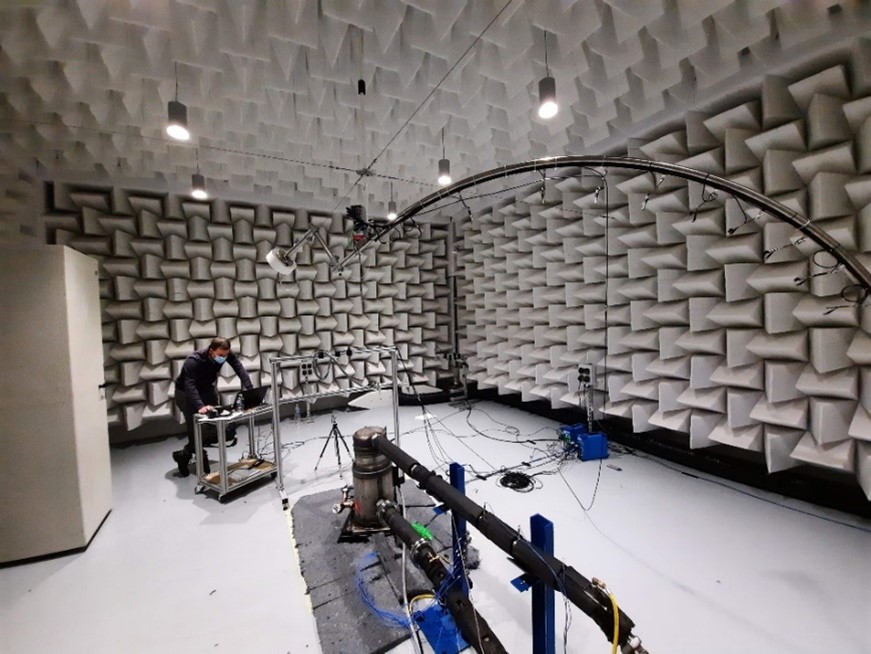
| | Sound Pressure Level Measurement for Sound PowerSound Power Level is a usual figure to check during production. It is processed in order to check that the end of line product corresponds to noise specifications (alternators for example). It requires a semi free field environment but is very fast and easy to achieve and so particularly adapted to a production test bench.
|
![]() | Sound Intensity Measurement for Sound PowerSound intensity is a very flexible technique that is portable and adapted to different type of acoustic environments (laboratory, test bench etc …). In order to determine Sound Power, two techniques described by ISO 9614 can be used: the point by point technique or the scanning technique. Standard 1/3 octave analysis and Overall analysis can be used to go further in the acoustic analysis. |
Laboratory | In Vehicle | Production |
![]() | ![]() | ![]() |
|
|
|